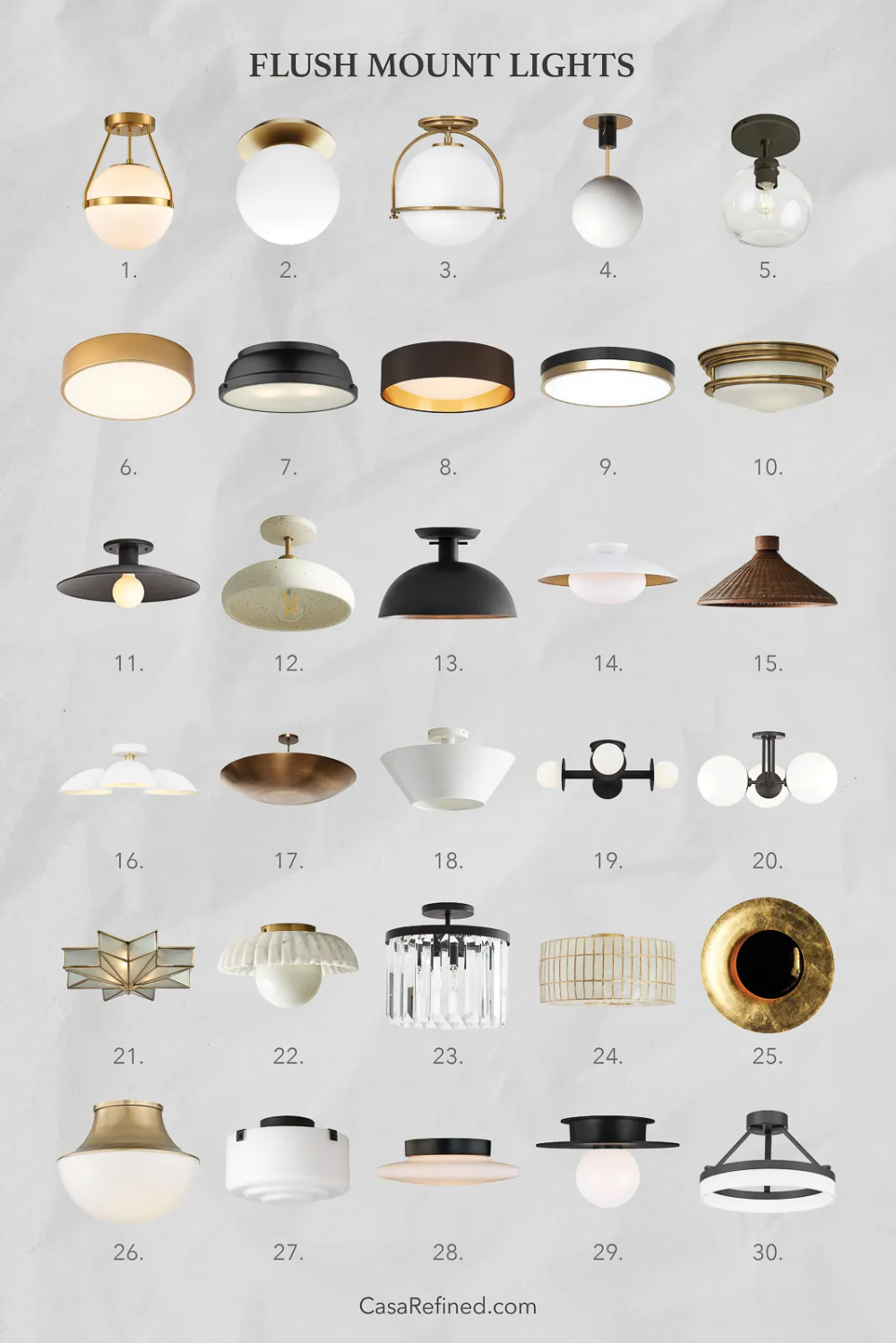
For anyone working from home, the right home office ceiling light is the unsung hero of productivity. It is the foundation of task illumination, the backdrop for video calls, and the element that defines the mood of your workspace. A well-considered fixture does more than just brighten a room; it reduces eye strain, minimizes shadows on your desk, and creates an environment conducive to deep focus.
Read also: Home Office Ceiling Lights
Decoding Your Space: The Psychology of Light Temperature
The first decision when upgrading home office ceiling lights revolves around color temperature, measured in Kelvins (K). This quality of light dictates how you feel and function within the space. You want to avoid the harshness of a hospital-grade 5000K overhead fixture, which can feel cold and clinical for long hours of work.
Warm vs. Cool: Finding the Balance
- 2700K - 3000K (Warm White): Ideal for relaxation zones or mixing with ambient room light. It creates a cozy atmosphere but can induce sleepiness if used for intensive tasks.
- 3500K - 4000K (Neutral White): The "Goldilocks zone" for most home offices. It mimics natural daylight without the starkness, providing clarity and focus without glare.
- 5000K+ (Daylight/Cool White): Best suited for detailed work like accounting or design, where precision is key. Use sparingly to avoid eye fatigue.
Choosing the right temperature ensures that your ceiling light supports your circadian rhythm, keeping you alert during the day and helping you wind down later.

Read also: Homemade Barn Door Handles
Layered Lighting: The Key to a Functional Ceiling Fixture
Modern home office lighting design relies on layers. Relying solely on a single central ceiling light often leads to shadows and glare. Your ceiling fixture should act as the anchor, but it must work in concert with other sources.
Task Lighting Integration
Consider how your ceiling light will interact with your desk lamp. A wide, fabric-covered flush mount or a semi-flush fixture provides a gentle, ambient wash that reduces the contrast between your screen and the surrounding area. This indirect light is crucial for preventing eye strain. If you require brighter, direct light for tasks, ensure your ceiling light has a dimming feature or position your task lamp to complement, not compete with, the ambient ceiling glow.
Read also: Honest Abe Log Homes Crossville Model Home Reviews
Style and Scale: Matching Fixtures to Your Room
The visual impact of your home office ceiling lights cannot be overstated. The fixture you choose will set the tone for the entire room. In a minimalist space, a sleek, low-profile LED panel or a geometric metal pendant can serve as a sophisticated focal point.

Matching Decor Aesthetics
- Modern/Industrial: Look for fixtures with black iron finishes, exposed filaments, or rectangular metal shades.
- Scandinavian/Warm Wood: Opt for light wood finishes, paper lanterns, or white poly shades to maintain a bright, airy feel.
- Traditional/Classic: Choose brass or bronze finishes with fabric or crystal diffusers for a timeless look.
Always measure your ceiling height and available width. Low ceilings require flush or semi-flush mounts to prevent head bumps, while high ceilings can accommodate stylish pendants or chandeliers that draw the eye upward.
Practical Considerations: Function Meets Form
Beyond aesthetics, your home office ceiling lights must perform. Three critical factors determine whether a fixture is right for your space: brightness, adjustability, and installation.
Installation and Control
| Fixture Type | Best For | Key Feature |
|---|---|---|
| Flush Mount | Standard 8ft ceilings | Low profile, easy to clean |
| Semi-Flush Mount | 10-12ft ceilings | Provides more ambient light |
| Pendant Light | High ceilings, zoning | Defines workspace visually |
Dimmable drivers or smart bulbs are highly recommended. They allow you to adjust the intensity throughout the day, mimicking natural light patterns. Furthermore, consider the shape of the light beam. Wide flood optics distribute light evenly for general use, while narrow spotlights are better for illuminating a specific desk area.

Energy Efficiency and Long-Term Value
When shopping for home office ceiling lights, checking the lumen output is just as important as looking at the wattage. Modern LED technology allows for high brightness with low energy consumption. A fixture rated at 10-15 watts can easily replace an old 60-watt incandescent bulb, providing a brighter, cooler light that lasts years.
This shift to LED also impacts the frequency of maintenance. Quality LED drivers can last over 50,000 hours, meaning you might never change a bulb in a decade of remote work. Look for fixtures with a high Color Rendering Index (CRI) of 80 or above; this ensures that the colors on your screen and in your workspace appear natural and true to life, reducing the visual fatigue caused by poor color representation.